Saturday, 18 June 2011

Insomnia or How to have fun with a Random Letter Generator.


Recently, when I couldn't get to sleep I invented a new game using my digital alarm clock. Here's how it works: look at the time on the clock -
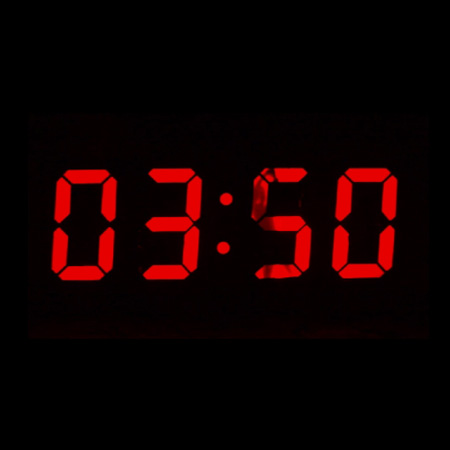
in this case 03:50, turn the numbers upside down so that they read O S E O and then try to think of as many words as you can which contain that sequence of letters .eg OStEOporosis.

So how can I use this amazing idea in the classroom?

Well, David Reed Associate Professor of Computer Science at Creighton University in Omaha, Nebraska has created a Random Letter Sequence Generator.

It is ideal for improving word power of MFL students. It allows you to choose the length of each random letter sequence and lets you choose which letters to randomise

For beginners you could choose to have 2 random letters and more for more able students. depending which language you are choosing, you can remove the less common letters. For example, if I were to be doing this task in French I would probably remove the letter K from the list before I started.

It is one of those games which students of all abilities could use and is easy to differentiate.

I haven't used it with my groups yet as I only discovered the generator very late last night. I imagine it will be really good and urge you to try it.

What could possibly go wrong?

Wednesday, 15 June 2011

Desert islands discs - getting the sixth form speaking.

Sadly, it's very rare now that I find myself in a pub with my old friends Dave, Dave and Steven. Usually, towards the end of the evening when we have discussed the important issues of how badly Oldham Athletic are getting on, how rugby league is not what it used to be and what ever happened to Melvyn Hayes (and, more importantly, is he related to Geoffrey from Rainbow?) we always end up talking about our own "Desert Island Discs".

Desert Island Discs is a BBC radio programme in which a famous person chooses 8 gramophone records they would take with them should they ever be stranded on a desert island. The guest's life is then reviewed through their choice of records.

The idea is a very simple one and can be adapted for use in the classroom.

These are my rules:

For homework each student chooses 3 songs and prepares some notes.

In class they tell their partner which songs they have chosen and the reasons why.

The partner then asks questions to elicit further information and makes notes. This could be something like "Why do you like this song?" or "Where were you (or How old were you) the first time you heard this song?"

The pair then change roles.

Each student then gives a short summary to the group.

It is an interesting and fun way to get students speaking, taking notes and presenting to others and they seem to enjoy it.

Monday, 16 May 2011

Maslow, Motivation, and Me.

Last year at Teachmeet North East, Darren Mead recommended I read a book by Geoff Petty, Evidence-based Teaching. I did and it is very good.

In the book there is a chapter on motivation and using Abraham Maslow's hierarchy of needs. I'd come across Maslow before, as I have a degree in Languages and Business Management, and I was surprised at myself that I'd never linked Maslow with teaching before.

Since reading this, I have made a conscious effort to try to motivate my students following Maslow's theory.

Maslow's hierarchy of needs looks like this:
So, how do I use this model to motivate students?

Physiological and Safety Needs.
These seem obvious but students will not be motivated in a cold classroom and if the surroundings are not conducive to learning, students will not be motivated to learn.

Love Needs.
To give students a sense of belonging I do different things. I learn the students' names and greet them as they enter the room. I (occasionally) smile. I give merits and stamps for effort and participation, and display students' work in my classroom.

Esteem Needs.
In order to improve students' self esteem I make sure that all students in my class are treated with respect. I give opportunities for students to learn independently and use self and peer assessments, too. Another way to do this is to use students' work as a model for others to learn.

Self Actualisation Needs.
This is all about personal growth and achieving potential. How do I do this? By providing opportunities for students to express themselves, problem solving activities, using evaluation and discussing ideas, devising activities which are fun. In order to get to this top level of Maslow's hierarchy, the conditions of each earlier level must be achieved. Students who feel they are not respected will not take an active part in lessons.

Personally, I find that this has helped my planning and classroom management and I would urge others to follow this even if they use it only as a kind of checklist.

Monday, 9 May 2011

The best laid plans....

Every good teacher, and even some bad ones, will always have a back up plan.
You never know what disaster may ruin even the best planned lesson.
This week I had a major disaster.
You can see from the picture that the Mug of Misery has befallen a major accident...


So, in true Blue Peter style I have a replacement already lined up.


The MoM is dead. Long live the MoM.

Wednesday, 20 April 2011

Brits refuse to learn foreign languages.

My heart sank as I read this article from the Daily Mail this morning.

I'm not a regular reader of the Daily Mail, honest. I have set up a google newsfeed for anything relating to modern languages.

Apparently, the average British tourist knows fewer than 10 phrases of the language of the country they visit.

It isn't this which bothers me, though. It is the fact that this ignorance is worn as a badge of pride. Only in Britain can ignorance be a status symbol - something to be proud of.

Luckily for us, the Daily Mail has printed some useful phrases for us all to impress the locals when we travel abroad (Obviously, I have left in all their mistakes and I love the fact that readers are told how to ask the time in French but would have no idea how to translate the reply):

FRENCH

Hello (Bonjour)
Goodbye (Au revoir)
Yes (Oui)
Thank you (Merci)
My name is... (Je m'appelle...)
Do you speak English? (Parlez-vous Anglais?)
Good evening (Bon soir)
Wine (Vin)
What time is it? (Quelle heure est-il?)


SPANISH

Hello (Hola)
Yes (Si)
Thank you (Gracias)
Goodbye (Adios)
Good morning (Buenas dias)
Good evening (Buenos noches)


GERMAN

Hello (Guten tag)
Yes (Ja)
Thank you (Danke)
Goodbye (Auf weidersehen)
Good morning (Guten morgen)
My name is (Ich heisse)
Good evening (Guten abend)


ITALIAN

Hello (Salve)
Goodbye (Arrivederci)
Yes (Si)


Enjoy the holidays!

Tuesday, 19 April 2011

Subliminal language learning - an update.

I'm now two thirds into my "learn Icelandic subliminally" project. I'm afraid to say that it does not seem to be working.

I shall not give up hope, though. I still have until August to become totally fluent. Four more months of listening to the worst kind classical music should help me become totally fluent.

I can't wait.

Perhaps if it was working I'd have put it this way...

Ég er nú að tveir þriðju inn minn "learn Icelandic subliminally" verkefninu. Ég er hræddur um að segja að það virðist ekki vera að vinna.

Ég mun ekki gefa upp von, þó. Ég hef enn fyrr en í ágúst til að verða algjörlega altalandi. Fjóra mánuði að hlusta á versta klassískri tónlist ætti að hjálpa mér að verða algjörlega altalandi.

Ég get ekki beðið.

Takk Google Translate!

Monday, 11 April 2011

Cultural differences - a student's-eye view.

Four weeks ago, a colleague and I took a party of 18 A level students (aged 16-18) from Hartlepool, in the north east of England, to Paris for 4 days of sightseeing and French speaking.

The trip was a great success and every single one of them improved their French, trying it out on the unsuspecting locals who did their best to misunderstand and then sell them things they did want for prices they didn't want to pay.

Many of these students hadn't been to France before and now they were being immersed in Parisian culture for 4 whole days.

So, what cultural differences did they notice in the culture capital of the world? (My students' comments are in italics)

  • La bise - a perfectly normal greeting between French friends - the most alien thing in the world to kids from my school. (Look at them 2 women!)
  • Se serrer la main - they couldn't get over the fact that everyone did this on meeting people in the street or on the metro. (Why are they doing that?)
  • Fumer - apparently this is still a pretty cool thing to do if you're French. (Don't they know it's bad for them?)
  • Le café - everyone drinking coffee (Black coffee? Eeuurgh!) and hundreds of small pavement cafés all over the city.
  • People begging in the streets - something you don't see much in Hartlepool. You have to go to the bustling metropolis that is Middlesbrough for that.
  • Dogs - almost everyone appeared to have a dog and didn't seem to want to clean up after it. (Student: Sir, where's all this mess coming from? Me: Dogs, I hope!)
  • Food - Paris the world's capital of fine food (I hate this, I thought French food was supposed to be good. McDonald's doesn't even sell McFlurrys!)
  • French drivers - the French are famous for their bad driving skills and it seems that pedestrian crossings are just street art. Of course if you're English, in your late teens, and used to traffic driving on the left, crossing the road in many countries can be dangerous.
There you have it, all the differences between France and the UK as summed up by my students.


PS: In reality, the most French thing that happened was when I took them to the market at Saint Denis. We arranged to meet the students in the square at an agreed time. Some of them were late back, so as we were waiting, one of the stall holders came to chat to me. He asked what we were protesting against, how many more students were expected and where were we marching to.